
Start the Virginia Beach Former Owner Trail
A backward chain is the sequence of recorded transfers tied to one piece of Virginia Beach land. Start at the latest deed. Pull it from SRA/COVERS. Follow the prior instrument it cites, or trace the grantor's own purchase. The online index's earliest local year is not published in official material, so the clerk must confirm where coverage actually begins. Never fill an unknown cutoff with an assumed year.
| Source | Years It Covers | Where Held | What It Shows |
|---|---|---|---|
| SRA/COVERS index | Earliest Virginia Beach year not located | Virginia Beach Circuit Court Clerk | Grantor/grantee index entries and instrument leads |
| Older deed books and images | Local shelf years not located | Circuit Court Clerk | Recorded instruments beyond the online path |
| Historic plats | Specific local year range not located | Clerk and archival catalogs | Subdivision, lot, road and easement context |
| Library finding aids | Catalog coverage varies by collection | Library of Virginia and local library | Catalog leads for older locality records |
Use the online index first. When it returns an instrument, ask the clerk for the book or image behind it, since a catalog or map can only hint at a parcel's history. The Virginia SRA land-record portal separates an index search from a subscriber image. Only the recorded deed anchors the chain.
Walk Backward Through Virginia Beach Deeds
In the Virginia Beach grantor-grantee index, roles flip with every transfer. The former owner granted the later deed. Look for that same name as an earlier grantee. Start with the current owner of record. Repeat the role change, checking that each document describes the same parcel, because a shared name can point to a different person, an LLC, or an estate. The GPIN, lot description, and cited instrument keep the chain anchored to the land.
- Find the latest conveyance with the current owner named as grantee.
- Record the grantor, recording date, legal description and prior instrument reference.
- Search the grantor as grantee and compare the parcel description in the earlier deed.
- Repeat until the SRA index ends, then ask the clerk for the matching book or archive route.
- Grantor
- The party conveying the interest in a recorded instrument.
- Grantee
- The party receiving the interest.
- Chain of title
- The ordered record trail of transfers tied to a parcel.
- Reverse search
- Using a grantor as a grantee in an earlier period to find a prior deed.
- Legal description
- The recorded land description, often more stable than a street address.
How Far Back Virginia Beach Owner Records Go
No official source publishes the earliest Virginia Beach online index year, the image cutover, or the deed-book shelf range. The Circuit Court Clerk can confirm that limit. Treat it as a question, not a fixed date. Older chain work may shift from SRA to local deed books, microfilm, or cataloged archival material. Modern records rest on older Princess Anne County land history. A historic locality name can still appear, validly, in a deed for a present city parcel.
Record limit. The Virginia Beach online index cutoff was not confirmed. Ask the clerk which deed book or archived image holds the earlier instrument before treating an online search as the end of the chain.
Virginia Beach Former Owner Images May Need Approval
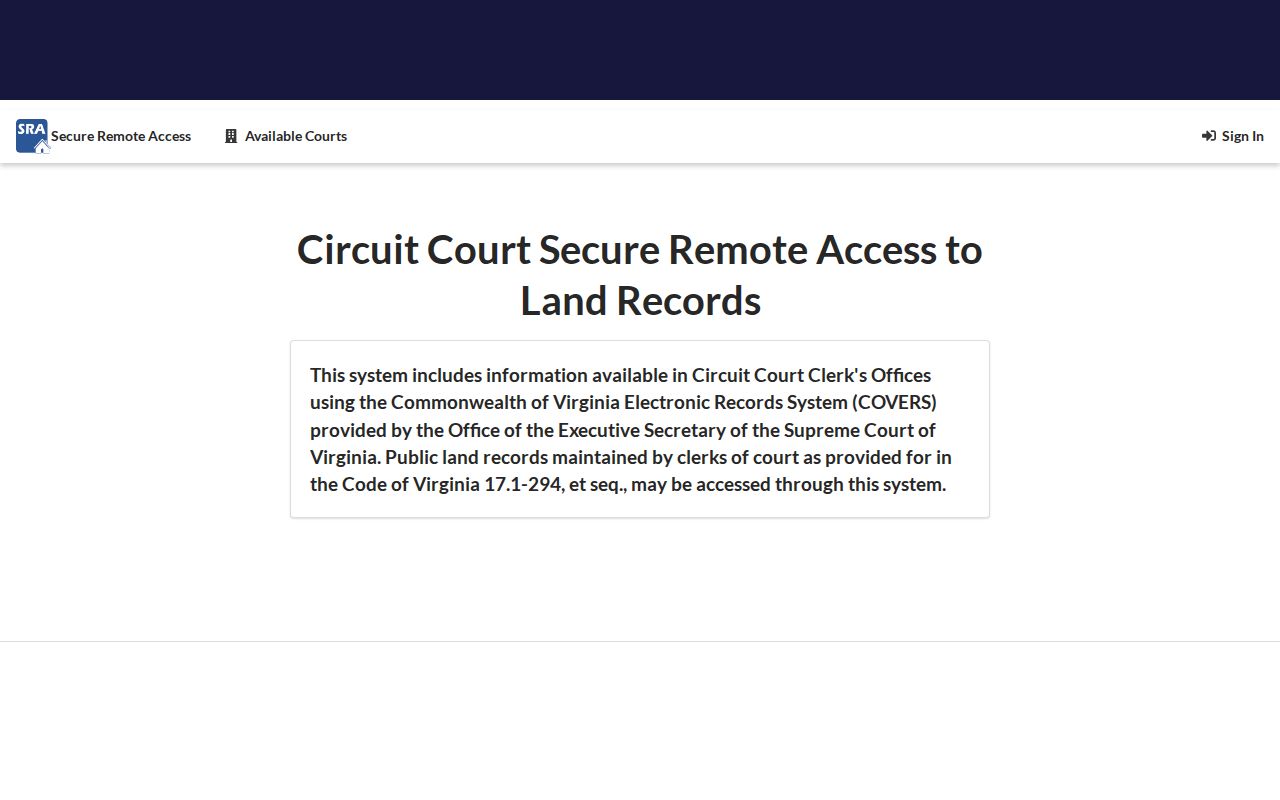
Virginia courts call SRA/COVERS a public land-record route. Index access and image access are different things. Some courts allow a free index-only search. Deed images require a subscription the local clerk authorizes, plus a signed agreement and payment. That split matters when tracing former owners. A result row can reveal the next party while hiding the instrument's legal description and prior reference.
The Virginia judiciary SRA access page displays the grantor-grantee entry point for the system.
Need a page image that is not online? Call Land Records at 757-385-8821, or ask about getting a counter copy in person.
Princess Anne County Names Virginia Beach History
Modern Virginia Beach grew from land recorded before the city existed. Older deeds and plats lean on Princess Anne County. They also lean on farm names, church or community landmarks, and older road names. Birdneck Road was once Seatack Road. A search using only the present name can miss a useful reference. Keep the historic spelling exactly as written. Then match it to the current GPIN, using the legal description and nearby landmarks.
The Circuit Court Clerk holds local deeds and plats first. The Library of Virginia and the FamilySearch locality catalog can surface finding aids. A catalog never replaces the original local instrument. No courthouse fire or destroyed-record event marks these holdings. Treat a missing image as unexplained rather than a known loss.
Use Virginia Archives for Older Owner Trails
Older owner trails often outlast the online grantor-grantee index. Take the deed reference to the clerk then. Ask about older books, microfilm, or retrieval. The Library of Virginia's catalogs and digital collections can identify locality records, land books, and archival context, and Virginia Beach Public Library local-history services can guide a search through directories, newspapers, and neighborhood material. Directory-year spans and reverse-directory holdings are unconfirmed here. Ask the reference desk first.
The Library of Virginia presents its catalog and collection landing page online. It is an archival starting point. Verify every catalog lead against the deed book or instrument kept by the local recording office.

Verify catalog leads against the recording office's deed book.
Estate Filings Can Break a Virginia Beach Deed Chain
A clean seller-to-buyer chain can be interrupted by a death, will, qualification of an executor, court order or fiduciary deed. Search the decedent and estate names in SRA, then ask the Probate/Wills Division at 757-385-8831 for the corresponding file or order. A death certificate supports identity and date but does not itself convey the parcel. The recorded deed or order that authorizes the transfer is the key ownership record.
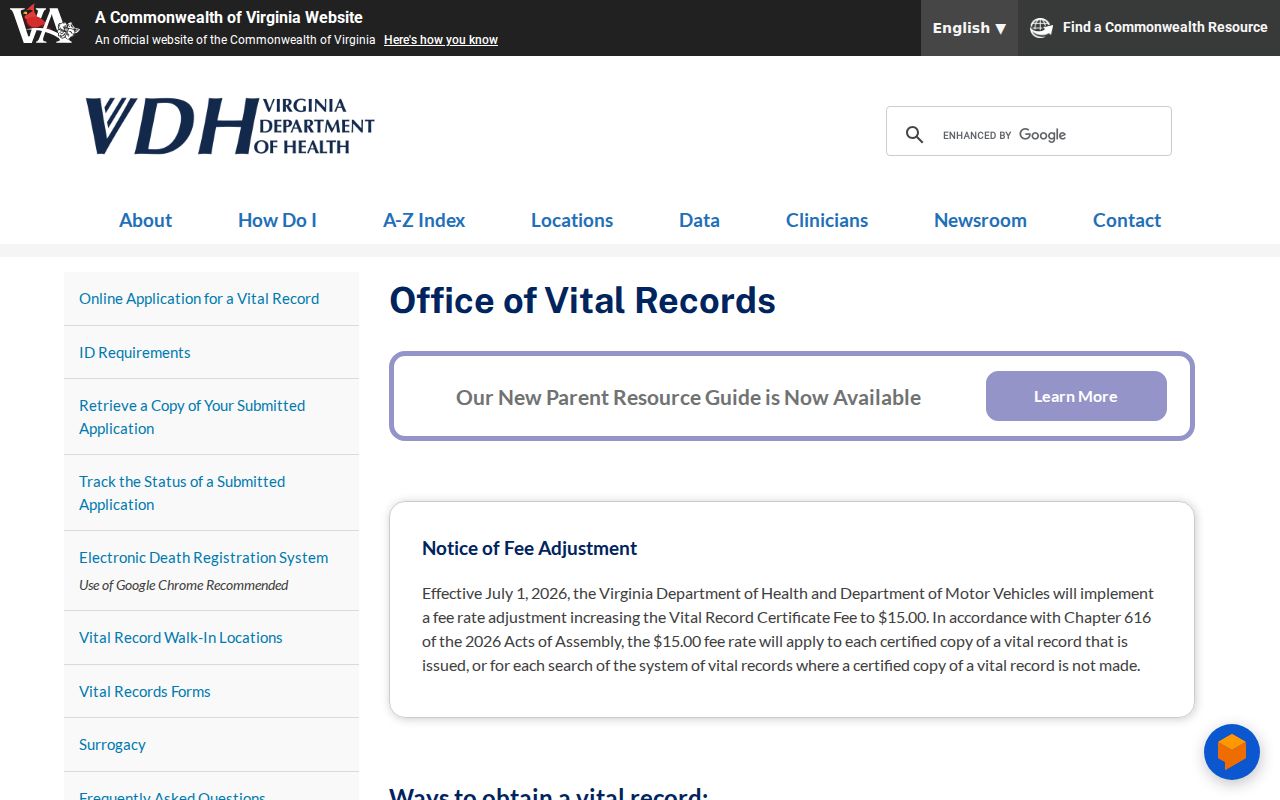
Virginia death records open after 25 years under Code §32.1-271; before then, certified copies are limited mainly to eligible immediate family with identification.
The image below shows the access information at the Virginia Department of Health vital-records page, a supporting path for an eligible request, not a substitute for the estate file or recorded deed.
Use death data only to find the estate or deed. Then confirm who actually received the land.
Virginia Beach Former Owners May Be Indexed by Variant
Search the name as recorded, then try a first initial, surname, married name, entity name or estate label when a chain stalls. A name-only match is not enough. Compare a deed's GPIN, legal description, grantor, grantee and cited prior instrument to keep the correct parcel. If an LLC appears, the SCC business filing can help identify the entity's current status, but its registered agent is not necessarily the land's beneficial owner.
When two former owners share a name, use the lot and subdivision reference to separate them. A plat, easement or legal description can resolve an ambiguity that the index alone cannot. Record the source for each transfer so a later reader can repeat the chain without guessing which person the name refers to.
Virginia Beach Former Owners Need Instrument Checks
A name trail running backward is not proof of clean title. A recorded deed can be corrected by a later instrument. It can also be altered by a court order. Liens and releases may shadow it as well. Access to SRA images depends on clerk authorization. The clerk has also documented no firm cutoff for the online index. For a real transaction or dispute, bring in a title professional. Read the recorded documents themselves.
Depth of time is the whole point of a former-owner search. The page on Virginia Beach deed records covers the clerk's index. It also covers the copy route in detail. Here, keep walking backward. Do so only while every grantor, grantee, and description still points to the same property.
Make the chain reproducible. Save each instrument's recording reference, transfer date, recording date, parties, and exact legal description. Compare that description against the next deed rather than trusting a street address. Subdivisions and road renaming can change one. When a deed cites a prior book or plat that is not online, ask Land Records to pull the cited source. Note how you retrieved it. A gap in the web index marks a research boundary. It is not evidence that the property had no earlier owner of record.